
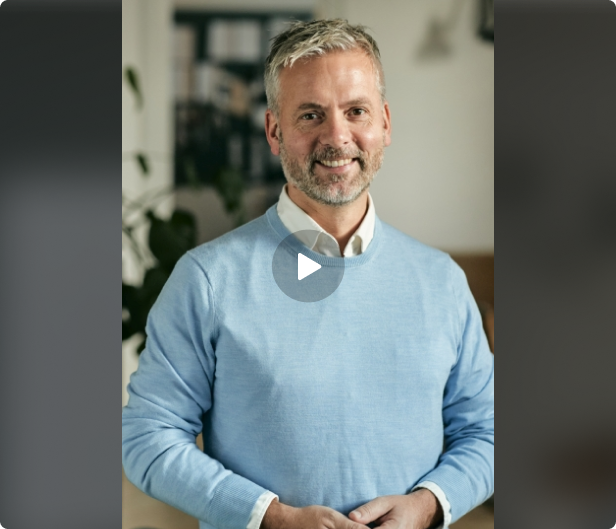
In this short video, I explain why I do not ask you to relive the worst of it straight away, and how we build enough safety on screen for the deeper work.
You can also send me an email
Online trauma therapy helps you when something overwhelming still lives in your body and your days, long after it is over. We meet one to one by video, in English, in 1-hour sessions with 50 minutes of therapy, at times that suit your time zone, from a room where you feel safe.
I help you steady your system first, then make sense of what happened and how it changed you, at a pace your body can tolerate. This is the trauma branch of my online psychotherapy. When the roots lie further back, there is more focused help in online childhood trauma therapy, online generational trauma therapy and online therapy after narcissistic abuse.
You are welcome to begin with a free 30-minute call, book a time that suits you, read my client policy or contact me in writing.
Online trauma therapy is for English-speaking adults, anywhere in the world, who went through something frightening or overwhelming and still feel its grip. You want to stop living on alert and feel at home in your own body again, with a therapist you can reach wherever you are.
Trauma takes many shapes, and some of them call for more specific help. If one of these lines matches what you carry more closely, the linked page will suit you better.
You can also send me an email
These reviews describe clients’ experiences of working with me. They come from my wider practice and do not all relate to online sessions. Each person’s experience is their own, and a review does not promise a particular outcome.
“Of all the people who find me online, the ones who struggle most with trauma are often those who try to force it out. They believe they must go back into the worst moment, quickly and in full, to be free of it. I disagree. Rushing tends to teach your body that therapy is one more place where it gets flooded. Underneath, one voice asks ‘Will you still be here if I show you how bad it was?’ Another says ‘I can carry this myself, please just let me be.’ Some people feel both in one breath: ‘Stay close, but do not touch that.’ Safety comes first, and slowness makes the rest possible.”
Mark Colclough, MA, psychotherapist and EFT couples therapist
I am Mark Colclough, MA. I have practised since 2004 and offer online psychotherapy and couples therapy in English.
My training brings together your emotions, your thoughts and your relationships. My deep passion is the moment when what happens between you finally makes sense, to each of you and to each other. I have lived and worked in nine countries, so I know something of life across languages, cultures and borders.
Read about my background, or explore online psychotherapy and online couples therapy.

I meet regularly with experienced psychotherapists to reflect on my work, question my understanding and develop my skills. Supervision is part of the professional care I bring to individual and couples work, including online sessions.
My focus is thoughtful practice, integrity and responsibility.
You are welcome to ask about the kind of support you need.
Tell me where you are based and your time zone. We can then consider whether online sessions together are suitable.
Hana is 39, a Czech architect who has lived in Vancouver for 8 years. A year and a half ago a man broke into her flat at night while she was home alone. He took her laptop and left, and the police called it a simple burglary. Since then she checks the locks 3 times before bed, sleeps with a lamp on and freezes at footsteps in the corridor. She has moved flats once already. Her partner gently asks why she is not over it yet, and Hana wonders the same.
I would not start with the night itself. In a first video session Hana would probably notice that her breath stops and her shoulders lift as soon as she comes near the memory, and that we can pause, let her feel her feet on the floor and return when she is ready. That small experience of choosing the pace is where the work begins.
I have presented this clinical example as a compound of 22 years of clinical practice.
You have tried to put it behind you, keep busy and be sensible about it, and still your body reacts as if it were happening now.
You do not need to wait for a correct moment or a strong enough reason to start trauma therapy. If something that happened still shapes how you sleep, react or relate, that is enough. You do not need a diagnosis, a clear account of events or a crisis before we meet. In 22 years of practice I have sat with many people carrying overwhelming experiences, and I can tell when the after-effects need careful, professional attention.
I will help you understand what your system is doing, what keeps the alarm switched on and what needs to change for you to feel safer. The 6 questions below may help you recognise where you are.
If so, it is worth taking seriously. You scan rooms for exits, sit with your back to the wall, startle easily and find it hard to unwind even at home. Your sleep may be light and broken, your concentration patchy and your patience thin, because your body is still braced for danger.
I would look at when the alertness began and whether it eases in some places or never lets go. That helps us tell a natural reaction that is slowly fading from one that has settled in. If this is how you live now, book a session with me and we can begin, gently.
Both wishes make sense, because each protects you differently. One part of you needs to make sense of the experience, to know why you react as you do. Another part wants to seal it away so it cannot hurt you again. You may swing between searching for answers and shutting the subject down.
I do not treat the avoiding part as resistance or the searching part as the healthy one. In the psychosynthesis tradition I trained in, we listen to both as parts of you with a purpose. I help you understand what each protects, so we can approach what happened without overwhelming you.
Yes, this is very common after trauma. A sudden change in tone, a partner coming home late or an unanswered message can feel like a warning. You watch closely, ask for reassurance and find it hard to settle until you know everyone is safe.
Your need for safety and closeness is legitimate, and I will not make you feel foolish about it. What I help you change is the alarm that fires before there is any real danger. We look at what the vigilance is guarding, and you practise saying what you need instead of monitoring everyone around you.
This is a familiar and confusing pattern after trauma. You long for comfort and call someone close, then feel trapped or irritated as soon as they arrive. Closeness feels both necessary and unsafe, and you may push people away and then feel abandoned.
In our sessions I slow this sequence down so we can see what tips you from wanting comfort to needing distance. Often it is a sense of being crowded or losing control. I hold real compassion for these protective shifts, and I will also help you take responsibility for the ones that hurt the people who care about you.
Many people after trauma cope by going numb or distant. When emotions rise or someone needs a lot from you, you may switch off, feel foggy, become very practical or simply leave the room. It can look like calm from the outside, while inside you feel absent.
My view is that shutting down once protected you, and it is not a failing. I help you notice the moment it begins and understand what it shields you from, so you can stay present a little longer without feeling flooded. You learn to say “I need a few minutes” before you disappear altogether.
Trauma can shake your sense of who you are. You may feel weaker, more fearful, less trusting or ashamed of how you reacted at the time. If it happened abroad, you may also feel cut off from the person you were at home. These changes show the impact of what you went through, not that you are damaged.
I help you look at which beliefs about yourself grew out of the experience and which are truly yours. I will challenge you when you blame yourself for things that were not in your control, but I will not tell you who to be. The aim is a clearer, kinder sense of yourself and the life you want.
If you saw yourself here, a free call lets us talk first, and booking a session lets you begin at your own pace.
You can also send me an email
Tell me briefly what kind of support you are looking for.
Include your country and time zone so we can discuss whether online work together is possible and find a suitable time.
You do not need to explain your whole story in your first message.
Your details are used to respond to your enquiry. Please leave detailed health information out of this form. Read the privacy policy for information about personal data, service providers and storage.
Understanding what happened matters, but the work also has to change how you sleep, react, trust and live day to day.
Working through trauma with me will help you understand what your body and mind are doing, recognise what keeps the alarm on and make changes you feel in your daily life. Insight into what happened is valuable, yet it rarely calms a nervous system by itself.
In 22 years of practice I have learned that trauma work needs an active, steady therapist. I guide the pace, notice what you may not and slow us down when you start to push yourself too hard. The 6 questions below describe where the work leads.
Related reading: How do I deal with a feeling that feels too big? and I know exactly why I do it. Why can’t I stop?.
I help you tell the core of the trauma apart from its ripples. Nightmares, jumpiness and avoidance are real, yet they are your system trying to protect you. Beneath them sit specific memories, sensations and beliefs: that the world is unsafe, that you should have done something differently, that you are alone with it.
I tell you what I see, what needs attention first and which stories keep you stuck in the past. When you feel ready, book a session with me and we will begin at a pace that respects your body.
You can learn to notice the early signs that come before you are flooded. It may be a tightening throat, a change in breathing, a flash of an image or a sudden urge to leave. Catching the first sign gives you a moment to ground yourself and choose a different response.
In our sessions I help you slow that sequence down and recognise its triggers and its protective purpose. Noticing it is not enough on its own. We practise grounding together on screen and between sessions until you can use it when it matters, without me there.
Steadying yourself does not mean forcing calm or pushing memories away. It means staying present enough to know where you are and that the danger is over, while still feeling what you feel. Your body often reacts to the past as if it were the present.
I help you notice the rise earlier and understand what your body is remembering. We find simple, specific ways to bring you back to the present, such as feeling your feet on the floor, and I will ask you to practise them daily between sessions.
Clear communication begins with knowing what you feel and need right now. After trauma, fear, shame or a wish not to burden others can make that very hard. You may stay silent, over-explain or expect people to sense what you cannot say.
Together we find words that are honest, specific and in proportion to the moment. I will challenge you when you silence yourself, and also when you leave others responsible for guessing what keeps you safe. We often rehearse a real conversation, such as telling a partner why you need the hall light on.
Decisions get clearer once you separate fear and avoidance from what you actually know and want. After trauma, you may want to move country, leave a job or end a relationship to escape the reminders, or you may feel unable to change anything at all.
I help you look at your options calmly and see what each would ask of you. I will give you my honest view and point out when fear seems to be in charge, but the choice remains yours. If big life choices keep stalling, we can give that its own time in our sessions.
Lasting change has to reach beyond our sessions, into your nights, your journeys and your relationships. You may need new routines, gentler expectations of yourself, people you can lean on and a way of returning to places you have avoided.
Together we work out what in your life has to shift and what is already good enough. What happened will always be part of your story, and the aim is not to erase it. The aim is a life in which you choose your direction rather than being steered by the alarm.
You can also send me an email
You do not need to tell me everything that happened, or tell it in order. We start with how you are now and what you need to feel safer.
When you begin, I listen carefully, help you name the central difficulty and set a clear direction from the first session, with safety as the first priority. You decide how much you share and when.
Online trauma therapy is one focused branch of my online psychotherapy, structured individual work on your inner life and your relationships. If what happened has put deep strain on your relationship, and your partner is willing, online couples therapy offers long-term relational development and healing. If you can already see that recovery will take time, a therapy bundle gives you a real saving and the safety of a plan agreed at the start.
In the first session I ask what brought you here now, how the experience affects you today, what you have tried and what you most want to change. You do not have to describe the event itself unless you choose to.
Before we finish, I share my first understanding and suggest a direction, and we agree how we will pause if things become too much. Then you decide whether my approach feels right. You can also have a free 30-minute call before you commit.
Individual work is right when the trauma lives mainly in you: your body, your memories, your reactions and the ways you have learned to protect yourself. We can explore how it affects your relationships without anyone else joining.
In individual sessions I give you direction, continuity and challenge, always paced to your capacity. If trauma is one of several themes you want to explore, online psychotherapy describes my structured individual work as a whole.
Couples therapy is the better path when your relationship needs sustained attention of its own. If what happened has left you distant from your partner, if you keep getting caught in the same painful arguments, or if one of you reaches out while the other pulls away, working together can help more.
In couples work I help you both see the cycle between you, take responsibility for your parts and build a safer bond. Online couples therapy is long-term relational development and healing, and some people steady themselves in individual trauma work before beginning couples sessions.
The right pace depends on how strongly the trauma affects you, how stable your life is right now and how much continuity you need to feel safe in the work.
I usually recommend weekly sessions to begin, because regular contact helps your system trust the process. I will tell you honestly if gaps are too long or when we can safely meet less often. For some people, a planned block of back-to-back online psychotherapy over a few days suits a demanding schedule better.
A bundle is a good choice when you know the work will need a series of sessions and you want steady continuity rather than deciding after each one. For trauma, predictability matters, and knowing the next sessions are already in place can itself feel steadying.
A bundle reduces the cost per session and gives you the safety of an agreed structure. You will find the details on therapy discounts and bundles and in the cards lower on this page.
Therapy has done its job when you have more ownership, clarity and choice, and the trauma has loosened its grip enough for you to live without the same level of support. A reminder may still stir you, but it no longer takes over.
We look at your progress together, honestly, and I do not keep you in therapy for its own sake. Sessions may become less frequent, pause or end when the work is done. Coming back later with something new does not mean what we did failed.

Not sure whether this is where to begin? Here is how online trauma therapy compares with the options people carrying an overwhelming experience most often consider.
| Option | Choose it when | Pace |
|---|---|---|
| Online trauma therapy (this page) | Something overwhelming still lives in your body and your days. | Weekly 1-hour video sessions, paced with care |
| Online childhood trauma therapy | The hardest experiences happened while you were growing up. | Weekly video sessions over months |
| Acute online psychotherapy | Something has just happened and you need help this week. | Video sessions within days, close together |
| Online therapy after narcissistic abuse | A controlling relationship has left you doubting yourself. | A steady course of video sessions |
Online trauma therapy with me is individual psychotherapy by video, in English, for adults still affected by a frightening or overwhelming experience. It focuses first on safety and steadiness, then on understanding what happened and how it changed you, at a pace your body can manage.
I work with the whole person: your body, your feelings, your relationships and the history you bring to the experience. I do not diagnose. Within my online psychotherapy, trauma is one of the main branches.
Come when what happened still disturbs your sleep, your relationships or your sense of safety, or when you find yourself organising life around avoiding reminders. If part of you knows it has not settled, trust that.
I look at how long the effects have lasted, whether they are easing or spreading and what you have stopped doing because of them. If they persist after months, careful help is worth seeking.
Yes, often it can. Trauma does not expire, and many people first seek help years later, once life is calm enough for the effects to surface. I make no promises about how far things will shift, and I do not work with quick techniques.
In my clinical experience, old trauma often becomes more workable once you feel safe in the therapy relationship. I focus on what your body still holds and what you learned about yourself and the world at the time.
No. You decide what you share and when. Much trauma work happens by noticing how your body responds now, rather than retelling the event in full.
I will never push you to describe more than you can manage. Going slowly is not avoidance. It is what allows your system to process what happened without being overwhelmed again.
Both are your nervous system trying to protect you. Sometimes it revs up into alertness, ready for danger. Sometimes it shuts down to spare you from too much feeling. Neither is a fault in your character.
I help you recognise which state you are in, what tips you into it and what it costs you. Then we build ways to return to a steadier middle ground, where you can feel without being flooded or switched off.
We start with how you are today. I ask what affects you most now, how your body reacts and what you hope will change, and we agree how to pause if it gets too much. By the end you will have my first understanding and a gentle plan.
There is nothing to prepare, and you do not need to tell the story. Whenever you feel ready, choose a first session, or start more gently with a free 30-minute call.
Plan for a course of sessions over several months. A single, recent event may need less time, while trauma that is layered or linked to earlier experiences usually needs longer. What matters most is that the pace feels safe.
In 22 years of practice I have found that a clear, honestly reviewed course works better than open-ended drifting. We review together at regular points and agree whether to continue, slow down or end.
Yes, for most people, as long as we build safety carefully. Being in your own space can feel more protected than an unfamiliar room, and video lets you continue if you move country. If you ever feel overwhelmed on screen, we slow down and ground you before going on.
You need a private room where you will not be interrupted, headphones, a stable connection and a laptop or tablet. Keep a glass of water and something comforting nearby. Times appear in your own time zone, and we can discuss any concerns on a free call.
Trauma work with me is individual psychotherapy, booked as 1-hour online sessions that each include 50 minutes of therapy. Fees are listed in US dollars on my prices page.
Where the work is likely to take a while, a therapy bundle saves 10 per cent per session and gives you a predictable plan. See therapy discounts and bundles for the options.
You can go straight to booking a session, or start with a free 30-minute call if hearing my voice first would help. The booking page translates each time into your own time zone.
If something has just happened, or no time is soon enough, contact me directly. I hold some room for acute cases, usually within days, and acute online psychotherapy explains that help. Take the first step when you feel ready, and we will go at your pace.
You can also send me an email
I want therapy to help you understand your experience and make choices you can use in everyday life. We pay attention to feelings, needs and the responses that happen before you have time to think.
Our online room should offer enough trust and honesty to explore what is difficult. I bring attention and professional judgement. You bring your experience, questions and the right to say when something does not fit.


Sign up for my occasional writing on feelings, relationships and life between cultures. No spam, and you can unsubscribe whenever you like.
I have designed this website to offer you a private, ad-free experience. Your personal data is never used, sold or shared with third parties. A few cookies are necessary for the site to work. If you say yes to helping me, I would also like to use one or two that show how the site is used, so I can improve its flow and content for you. It is completely pseudonymous, which means it does not identify you by name.
Please fill in your details and I’ll contact you soon. I use your details to reply to your enquiry, talk through practicalities and, if you wish, arrange an online session. Requesting a call also adds your email address to my mailing list. Please do not write sensitive information in the message field.
Clicking the button adds your email address to my mailing list. Please read the Privacy Policy for more information.
P.S. I’ll call you in a bit!