
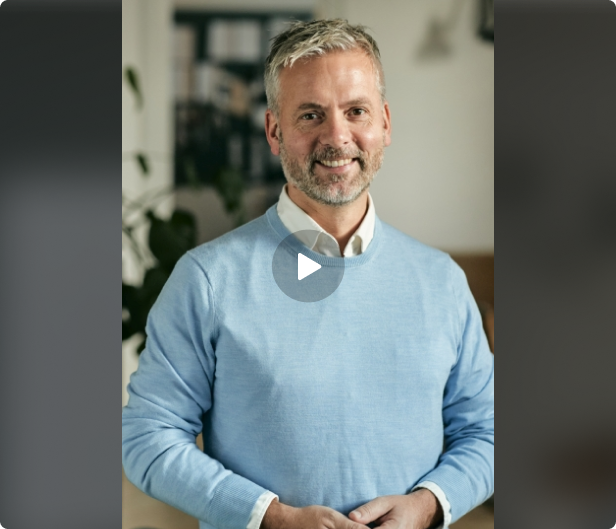
In this short video, I explain what one partner can achieve alone when a neurodivergent relationship is under strain far from home.
You can also send me an email
Neurodivergent couples therapy alone, living abroad, is for one partner in a relationship outside your home country where ADHD, autism, AuDHD or a similar profile plays a part. You may be the neurodivergent partner, or the one who loves someone who is. We meet by video, one to one, in English, at an hour that fits your time zone.
It is the one-person version of neurodivergent couples therapy for couples living abroad, and part of couples therapy for couples living abroad.
You can ask for a free 30-minute call, book a session, read my client policy or write to me.
These one-to-one sessions are for one partner in a relationship abroad where neurodivergence is part of the picture. You take part on your own, by video.
This page is for one partner coming alone. If another line fits better, follow its link.
You can also send me an email
These reviews describe clients’ experiences of working with me. They come from my wider practice and do not all relate to online sessions. Each person’s experience is their own, and a review does not promise a particular outcome.
“In my clinical experience, the person who comes on their own is often the one who has been translating the relationship for both partners: explaining one mind to the other, one country to the other, and getting tired. Underneath, some are asking ‘Will you ever see what this costs me?’ and others ‘If I say what I need, will you move even further away?’. Far from home those questions weigh more. Answering them for yourself first is very often where the relationship starts to move again.”
Mark Colclough, MA, psychotherapist and EFT couples therapist
I am Mark Colclough, MA. I have practised since 2004 and offer online psychotherapy and couples therapy in English.
My training brings together your emotions, your thoughts and your relationships. My deep passion is the moment when what happens between you finally makes sense, to each of you and to each other. I have lived and worked in nine countries, so I know something of life across languages, cultures and borders.
Read about my background, or explore online psychotherapy and online couples therapy.

I meet regularly with experienced psychotherapists to reflect on my work, question my understanding and develop my skills. Supervision is part of the professional care I bring to individual and couples work, including online sessions.
My focus is thoughtful practice, integrity and responsibility.
You are welcome to ask about the kind of support you need.
Tell me where you are based and your time zone. We can then consider whether online sessions together are suitable.
Sofie is Danish and lives in Dubai with her husband, Ravi, who has ADHD. Since the move, Ravi has started three side projects, forgotten the residence renewal twice and keeps talking about the next country. Sofie feels alone with every practical task and has gone quiet. Ravi will not join therapy. He says it is just a busy year.
In our one-to-one sessions, Sofie sees how her silence and his restlessness feed each other. She learns to ask for help in short, concrete terms and to protect time that is hers. Months later, Ravi asks whether he could join one session.
I have presented this clinical example as a compound of 22 years of clinical practice.
You cannot make your partner join. You can still change how the two of you get along.
Far from family and old friends, it is easy to feel that you carry the relationship alone. Sessions on your own give you a place to think that is only yours.
We work on your side of the pattern, and on how to understand a partner whose mind works differently from yours, or whose mind sees you as the different one.
Some partners refuse therapy. That is often why people look for neurodivergent couples therapy alone. Others would like to but find the idea overwhelming, or cannot face a two-hour call.
You can begin anyway. Many people find that when they change, their partner starts to respond differently too.
If you are autistic, have ADHD or both, a new country can drain you in ways your partner does not see: noise, small talk, admin, a foreign language all day.
We look at what you need to recover, and how to say it without sounding like you are pulling away.
If your partner is the neurodivergent one, you may feel confused, lonely or worn out by misunderstandings you cannot explain to anyone back home.
We work on making sense of their signals and on looking after yourself as well.
Some people come alone first to get clear before suggesting joint sessions. That can make the first shared session feel much safer for both of you.
If you both want it later, you can move into joint sessions for couples abroad.
Talking one to one can feel calmer than a session with two voices. You can take your time, repeat yourself and change your mind.
We go at a pace that suits how you think.
The question may be whether you can build a life together here, or whether going home or apart would be kinder.
We look at that with care. I will not push you either way.
If this is where you are, request a call or book a session. You can also email me first.
You can also send me an email
Tell me briefly what kind of support you are looking for.
Include your country and time zone so we can discuss whether online work together is possible and find a suitable time.
You do not need to explain your whole story in your first message.
Your details are used to respond to your enquiry. Please leave detailed health information out of this form. Read the privacy policy for information about personal data, service providers and storage.
You are only one half of the relationship. That half can still move a lot.
In neurodivergent couples therapy alone, we look at your reactions, your partner’s likely reasons and the demands of the place you live, so that you can respond with more understanding and less exhaustion.
We map the moments that go wrong: what sets you off, what you do next and how your partner seems to answer. Seeing your own move in the pattern is the first lever you have.
Yes. We turn needs like quiet, structure, closeness or clear plans into short, concrete requests that a partner with a different mind can actually act on.
Often, yes. We look at what your partner’s shutdowns, bursts of energy or literal replies may mean, so you take them less personally and answer more calmly.
Yes. We find ways to rest and recover that do not look like rejection, and ways to say ‘I need a pause’ that keep the door open.
Yes. We practise what to do when an argument starts: how to slow down, take a break and come back to it without either of you losing face.
For most people it means fewer explosions, less guilt or resentment and more confidence about what to do when things get hard.
You can also send me an email
You do not need your partner’s permission, a diagnosis or the right words. You only need to want something to change.
In the first sessions of neurodivergent couples therapy alone, I get to know you, your relationship and life where you live now. If another form of help would serve you better, I will say so.
It lasts one hour, by video. You tell me about your relationship, where you live, what is hardest and what you hope for. You finish with a clearer picture and a first thing to try.
Yes. We can pause, turn the camera off for a while, use the chat to write, or keep a slower rhythm. Tell me what helps.
Yes, if you both want that. Some people move into joint sessions once things feel safer. Others keep working alone.
Neurodivergent couples therapy alone usually starts every one to two weeks, then less often as things settle.
Work on your own usually runs over a number of weeks. A bundle sets out that plan and lowers the price per session. The bundle cards below show the options.
When neurodivergent couples therapy alone is working, arguments calm down faster, you feel less alone and your partner may start to respond differently. We review progress together regularly.

Not sure this is your page? These are the closest options.
| Option | Choose it when | Pace |
|---|---|---|
| Neurodivergent couples therapy alone, living abroad (this page) | You come alone, and neurodivergence and life abroad both shape the strain. | One-hour online sessions, often weekly at first |
| Neurodivergent couples therapy, living abroad | You both want to take part. | Two-hour online sessions every two to three weeks |
| Online neurodiverse couples therapy alone | Life abroad is not part of the strain. | One-hour online sessions |
| Couples therapy alone, living abroad | Neurodivergence is not part of the picture. | One-hour online sessions |
It is one-to-one online sessions, in English, for one partner in a relationship abroad where neurodivergence is part of the picture. You work on your side of the pattern and on understanding your partner.
Yes, often more than people expect, and that is the whole idea of neurodivergent couples therapy alone. When one person responds differently, the pattern between you has to shift as well.
Both. Some people who come are autistic or have ADHD themselves. Others love someone who is. The work is adjusted to you.
No. Many people come with a diagnosis, some with a suspicion and some just knowing their relationship works differently.
No. I am a psychotherapist, not an assessment service. I can talk with you about where to look for an assessment in the country you live in.
Yes. Danes abroad and partners of Danes are welcome. We work in English.
I only hear your side in the room, and I keep that in mind. I will help you see your partner fairly, and I will also challenge you kindly when that is useful.
Neurodivergent couples therapy alone has no fixed length. Some people need a few sessions to find their footing, others want support over months. We review it together.
Sessions on your own last one hour. You can see current fees, in US dollars, on my prices page, and a therapy bundle saves you 10 per cent.
Choose a time in the calendar, which shows your own time zone, or ask for a free 30-minute call first.
You can also send me an email
I want therapy to help you understand your experience and make choices you can use in everyday life. We pay attention to feelings, needs and the responses that happen before you have time to think.
Our online room should offer enough trust and honesty to explore what is difficult. I bring attention and professional judgement. You bring your experience, questions and the right to say when something does not fit.


Sign up for my occasional writing on feelings, relationships and life between cultures. No spam, and you can unsubscribe whenever you like.
I have designed this website to offer you a private, ad-free experience. Your personal data is never used, sold or shared with third parties. A few cookies are necessary for the site to work. If you say yes to helping me, I would also like to use one or two that show how the site is used, so I can improve its flow and content for you. It is completely pseudonymous, which means it does not identify you by name.
Please fill in your details and I’ll contact you soon. I use your details to reply to your enquiry, talk through practicalities and, if you wish, arrange an online session. Requesting a call also adds your email address to my mailing list. Please do not write sensitive information in the message field.
Clicking the button adds your email address to my mailing list. Please read the Privacy Policy for more information.
P.S. I’ll call you in a bit!