
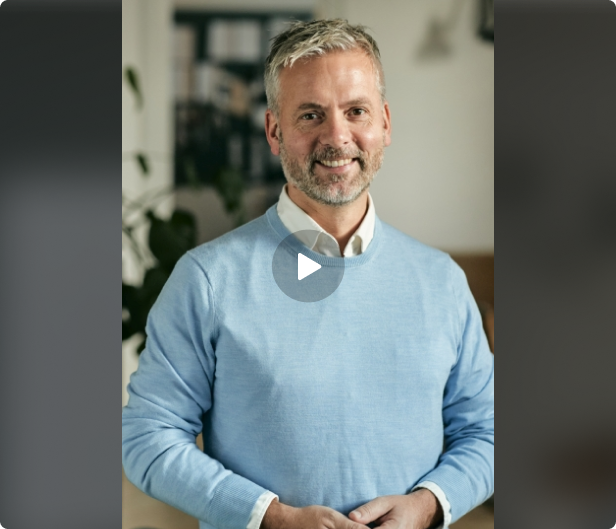
In this short video, I explain how I work online with couples abroad when one or both of you process the world in your own way.
You can also send me an email
Neurodivergent couples therapy, living abroad, is for English-speaking couples outside their home country where one or both of you has ADHD, autism, AuDHD or a similar profile. We look at how your different ways of thinking, sensing and communicating collide with the extra load of a life abroad. We meet by video, at an hour that fits your time zone.
It joins two branches: couples therapy for couples living abroad and online neurodiverse couples therapy. If your partner will not take part, the version for one partner on their own is open to you.
You can ask for a free 30-minute call, book a session, read my client policy or write to me.
Neurodivergent couples therapy, living abroad, is for couples outside their home country where one or both of you are neurodivergent. You both take part, by video.
This page is for couples abroad where neurodivergence is part of the picture, taking part together. If another line fits better, follow its link.
You can also send me an email
These reviews describe clients’ experiences of working with me. They come from my wider practice and do not all relate to online sessions. Each person’s experience is their own, and a review does not promise a particular outcome.
“Having lived and worked in nine countries myself, I know how much a move asks of anyone’s nervous system. With neurodivergent couples abroad, I often find that one partner has been running on reserve power for a year, and the other has read that as distance. Nobody chose it, and nobody is to blame. Once both of you can see the cost of the move clearly, the arguments about effort and love usually soften, and you can start to plan a life abroad that fits both of your brains.”
Mark Colclough, MA, psychotherapist and EFT couples therapist
I am Mark Colclough, MA. I have practised since 2004 and offer online psychotherapy and couples therapy in English.
My training brings together your emotions, your thoughts and your relationships. My deep passion is the moment when what happens between you finally makes sense, to each of you and to each other. I have lived and worked in nine countries, so I know something of life across languages, cultures and borders.
Read about my background, or explore online psychotherapy and online couples therapy.

I meet regularly with experienced psychotherapists to reflect on my work, question my understanding and develop my skills. Supervision is part of the professional care I bring to individual and couples work, including online sessions.
My focus is thoughtful practice, integrity and responsibility.
You are welcome to ask about the kind of support you need.
Tell me where you are based and your time zone. We can then consider whether online sessions together are suitable.
Priya and Lukas moved from Berlin to Melbourne eighteen months ago for Priya’s research post. Lukas, who has ADHD, now runs the household, the visas and the move of their two children into a new school. Priya, who is autistic, comes home each evening drained by a noisy open-plan lab and needs an hour of silence before she can talk. Lukas hears that silence as rejection. Priya hears his questions at the door as a demand she cannot meet.
In our online sessions they see that neither of them is withholding love. Both are overloaded in different ways. They agree on a quiet hour, written messages for logistics during the day and one shared evening each week with nothing to organise.
I have presented this clinical example as a compound of 22 years of clinical practice.
A new country drains any nervous system. When your two systems run differently, the relationship often pays the bill.
Life abroad brings new noise, new paperwork, new habits and often a new language. For a neurodivergent partner, that can swallow the energy that once went into being close.
We put that load on the table honestly, so that tiredness or overwhelm stops being treated as a character flaw.
The posting that thrilled one of you may have left the other running on empty for months. From the outside, exhaustion can look like reluctance.
We work out what the move has really cost each of you, and what recovery would take.
Every country has social codes nobody writes down. Missing them at the office, at school or with the neighbours builds a quiet stress that bursts out at home in the evening.
We separate the strain of the place from what is going on between the two of you.
Often one partner ends up with the visas, the bank, the doctor and the calendar. After a while they feel like a project lead, not a partner.
We look for a split of tasks that matches how each brain actually works.
A shutdown or meltdown can look like coldness or rage from the outside. The other partner feels pushed away, or scared.
We learn what is happening inside each of you in those moments, and what helps instead of what hurts.
When one of you speaks a second language, a literal style and an indirect style clash even harder. A small slip can land as a deep insult.
We slow the conversation and check meaning, so that words cause less damage.
For some adults, the strain of moving is the first time ADHD or autism comes up at all.
We can talk through what a diagnosis, a suspicion or no label at all means for the two of you, without deciding it in advance.
Sounds familiar? Request a call or book a session. Writing to me first is fine too, if that is easier.
You can also send me an email
Tell me briefly what kind of support you are looking for.
Include your country and time zone so we can discuss whether online work together is possible and find a suitable time.
You do not need to explain your whole story in your first message.
Your details are used to respond to your enquiry. Please leave detailed health information out of this form. Read the privacy policy for information about personal data, service providers and storage.
Two ways of thinking, a foreign country and one relationship. We give each of them its own place.
In neurodivergent couples therapy abroad, we hold three things apart: how each of you thinks and senses, what the country asks of you, and the cycle that runs between you. Mixing them up is where most of the blame comes from.
Together we sort which struggles come from neurodivergence, which from the place you live and which from how you react to each other. Each one needs a different kind of answer.
Yes. We find clear words for needs such as silence, routine or more contact, so that asking does not sound like an accusation.
Yes. We test what suits each of you: written messages, very direct sentences, time to think before answering, or shorter talks with breaks.
Yes. We map who carries which tasks, which ones drain each of you the most, and how to share them so that it feels fair to both.
Yes. We plan ahead for the next posting, the trips home and job changes, with rest built in, so a big change does not push either of you into overload.
For most couples it means fewer painful misreadings, more patience and a home that feels like a place to recharge rather than one more demand.
You can also send me an email
You need no diagnosis and no perfect words. Come as you are.
Over the first sessions I get to know you both, how each of you works best and what brought you to me. If another kind of help would fit better, I will say so.
It runs for two hours by video, with breaks whenever you need them. Each of you tells me what daily life abroad is like and what feels hardest between you. You finish with a clearer picture and a few first steps.
Yes. Cameras can be off for a while, we can pause, slow the pace or use the chat to write. Tell me what helps, and we will build it in.
No. Some couples arrive with a diagnosis, some with a hunch, and some simply know their minds work differently. Everyone is welcome.
Most couples in neurodivergent couples therapy meet every two to three weeks, so you have time to try things out at home in between.
If you expect several sessions, a bundle gives you a clear plan and a lower price per session. You can compare the bundles in the cards further down.
The painful misunderstandings get rarer, the weight of life abroad feels shared, and you both have more energy left for each other. Then we decide together what comes next.

Not sure this is your page? These are the closest options.
| Option | Choose it when | Pace |
|---|---|---|
| Neurodivergent couples therapy, living abroad (this page) | Neurodivergence and life abroad both shape the strain. | Two-hour online sessions every two to three weeks |
| Online neurodiverse couples therapy | Neurodivergence is the strain, and life abroad is not. | Two-hour online sessions every few weeks |
| Couples therapy for couples living abroad | Life abroad is the strain, and neurodivergence is not part of it. | Two-hour online sessions every few weeks |
| Neurodivergent couples therapy alone, living abroad | Your partner will not join. | One-hour online sessions on your own |
It is online couples therapy, in English, for couples living outside their home country where one or both partners are neurodivergent. We work by video, wherever you are.
Couples who have moved abroad, couples who feel like expats where they now live, and couples where one partner is local and the other is not, whenever ADHD, autism, AuDHD or a similar profile is part of the picture.
Yes, all of them. Many couples have a mix, and some have no formal label at all.
This page is for couples where life abroad adds to the strain. If it does not, online neurodiverse couples therapy suits you better.
No. I am a psychotherapist, not an assessment service. I can talk with you about where to look for an assessment in the country you live in.
Yes. Danes abroad are welcome, and so are mixed couples where one partner is Danish. We work in English.
Yes. Typing in the chat, sketching or using notes is welcome if it helps you think or say what you mean.
It varies. Some couples need a handful of sessions to find a new way of working together, others want support for longer. We review it together.
Sessions are 2-hour online couples sessions. You can see current fees, in US dollars, on my prices page, and a therapy bundle saves you 10 per cent.
Choose a time in the calendar, which shows your own time zone, or ask for a free 30-minute call. You can also send me an email first.
You can also send me an email
I want therapy to help you understand your experience and make choices you can use in everyday life. We pay attention to feelings, needs and the responses that happen before you have time to think.
Our online room should offer enough trust and honesty to explore what is difficult. I bring attention and professional judgement. You bring your experience, questions and the right to say when something does not fit.


Sign up for my occasional writing on feelings, relationships and life between cultures. No spam, and you can unsubscribe whenever you like.
I have designed this website to offer you a private, ad-free experience. Your personal data is never used, sold or shared with third parties. A few cookies are necessary for the site to work. If you say yes to helping me, I would also like to use one or two that show how the site is used, so I can improve its flow and content for you. It is completely pseudonymous, which means it does not identify you by name.
Please fill in your details and I’ll contact you soon. I use your details to reply to your enquiry, talk through practicalities and, if you wish, arrange an online session. Requesting a call also adds your email address to my mailing list. Please do not write sensitive information in the message field.
Clicking the button adds your email address to my mailing list. Please read the Privacy Policy for more information.
P.S. I’ll call you in a bit!