
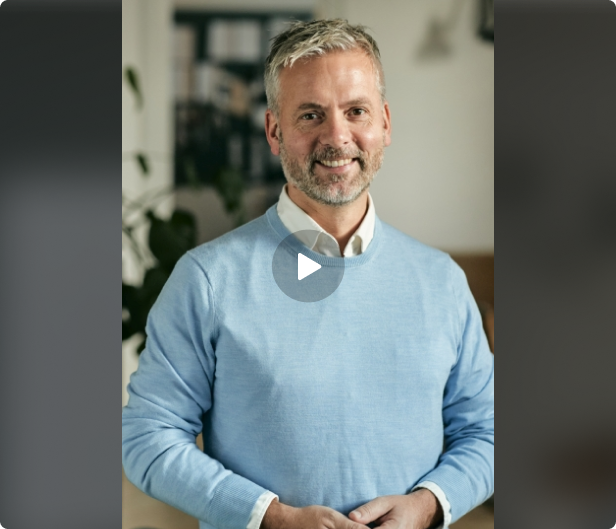
In this short video, I explain why a frightening thought gets louder the harder you push it away, and what starts to shift once it can be spoken in a calm room on screen.
You can also send me an email
Online intrusive thoughts therapy helps you when sudden, unwanted thoughts or images shock you, stick to you and make you doubt who you are. We work one to one by video, in English, in 1-hour sessions with 50 minutes of therapy, at times shown in your own time zone, from a room where you feel private.
I help you speak the thoughts without being judged, understand why they latched on to what you love most, and stop the checking and avoiding that keep them alive. This work is a focused strand of online anxiety therapy and part of my wider online psychotherapy.
When you are ready, set up a free 30-minute call, choose your first session, read the client policy on confidentiality, or message me privately.
Online intrusive thoughts therapy is for English-speaking adults, wherever they live, who are haunted by thoughts or images that feel completely unlike them. You may have kept them secret for months or years. You want to understand them, and to stop living as if you were a danger.
Not every unwanted thought belongs here. If your experience sounds more like one of these, the page linked suits it more closely.
You can also send me an email
These reviews describe clients’ experiences of working with me. They come from my wider practice and do not all relate to online sessions. Each person’s experience is their own, and a review does not promise a particular outcome.
“Working with people in many time zones, I have noticed that intrusive thoughts flourish in isolation, and living far from home often means more isolation than people admit. The thought itself is rarely the worst part. The worst part is the silence around it. Behind that silence I hear ‘If anyone knew what my mind does, would I still be loved?’ and also ‘This is my mess, and I will contain it on my own.’ I hold a firm view here: a thought spoken aloud to someone who stays calm and stays present begins to shrink. Kept secret, it grows.”
Mark Colclough, MA, psychotherapist and EFT couples therapist
I am Mark Colclough, MA. I have practised since 2004 and offer online psychotherapy and couples therapy in English.
My training brings together your emotions, your thoughts and your relationships. My deep passion is the moment when what happens between you finally makes sense, to each of you and to each other. I have lived and worked in nine countries, so I know something of life across languages, cultures and borders.
Read about my background, or explore online psychotherapy and online couples therapy.

I meet regularly with experienced psychotherapists to reflect on my work, question my understanding and develop my skills. Supervision is part of the professional care I bring to individual and couples work, including online sessions.
My focus is thoughtful practice, integrity and responsibility.
You are welcome to ask about the kind of support you need.
Tell me where you are based and your time zone. We can then consider whether online sessions together are suitable.
Noah is 29, an Australian software developer who moved to Berlin last year. On a crowded U-Bahn platform in March, a picture of pushing the woman in front of him onto the tracks flashed through his head. Since then he waits at the back wall, takes the bus when he can, and lies awake searching whether thoughts like this mean he is a psychopath. He has told nobody. His girlfriend thinks he is just tired.
I would start by letting Noah say the thought in his own words, and by staying entirely calm when he does. In a first video session he would probably notice that the horror he feels is evidence of how much he values other people, and that the avoiding and checking have been feeding the fear.
I have presented this clinical example as a compound of 22 years of clinical practice.
You have tried to push the thoughts away, argue with them and avoid what sets them off, and they keep coming back stronger.
You do not need to wait until the thoughts are unbearable, and you do not need a label for them. If an unwanted thought is shaping what you do, where you go or how you see yourself, that is reason enough to come. You do not need a diagnosis or a crisis. Across 22 years of practice I have heard a great many frightening thoughts, and I know when a passing image has become a pattern that needs professional help.
I will help you see what the thought has attached itself to, what keeps it returning and what needs to change so it can fade into the background. These 6 questions may help you recognise your own experience.
If you are, the thoughts are already costing you too much. You take a longer route, leave the room when the baby is bathed, avoid sharp tools or certain websites. Each detour brings a little relief, and each one teaches your mind that the danger was real.
I would look at what you now avoid, how long the list has grown and whether it is still spreading. That tells us whether this is a frightening spell or a pattern that will keep tightening without help. If this sounds familiar, book a session with me and we can start to undo it.
That double pull is very common. One part of you is desperate to say it and be told you are not a monster. Another part guards the secret fiercely, because being seen feels like the greatest risk of all. Both are trying to keep you safe.
I take both sides seriously. The guarding part has good reasons for its caution, and the part that wants to speak has good reasons too. I help you discover what each is protecting, and we go at a pace where telling becomes possible, one piece at a time. You decide how much detail to share and when.
When a thought frightens you, you may need to hear from someone close that you are kind, safe and loved. You ask in roundabout ways, watch their face for doubt and feel calmer for a while, until the next thought arrives and you need to ask again.
The wish to be known and still accepted is entirely legitimate. What I help you change is the urgency: the alarm that insists you must be reassured right now. We look at what the reassurance is trying to settle, and you practise tolerating doubt for a little longer before reaching out.
Yes, and the swing can be disorienting. On a bad evening you lean hard on your partner or a friend. The next morning you feel exposed and go cold, as if you have said too much. They are left confused, and you feel more alone with the thoughts than before.
I slow this pattern down with you, so we can find the moment where comfort turns into shame. That moment usually has a history. I respect how hard you are working to protect yourself, and I will also ask you to notice what the coldness costs the people who are trying to stand by you.
Some people cope with frightening thoughts by closing the doors. You become efficient, polite and unreachable. You keep conversations practical and change the subject when anyone asks how you really are. It feels safer. It also means nobody can help.
My view is that this distance protects something important, usually a deep fear of being judged, and I will not push you to drop it before you are ready. I help you understand what the silence guards, so you can let one trusted person a little closer without feeling exposed.
After months of fighting unwanted thoughts, many people start to wonder whether the thoughts reveal their true self. You watch your own reactions, test your feelings and wonder whether the kind, careful person you thought you were is a front. That doubt is a symptom of the struggle, not proof of anything.
I help you sort out what the thoughts are and what they are not, and what in your history made you so ready to believe the worst about yourself. I will challenge self-condemnation when I hear it. I will not define you. The aim is to stand on firmer ground about who you are and what you value.
If you recognised yourself here, a free call is a low-risk way to test whether you can talk to me, and a session is there whenever you feel ready.
You can also send me an email
Tell me briefly what kind of support you are looking for.
Include your country and time zone so we can discuss whether online work together is possible and find a suitable time.
You do not need to explain your whole story in your first message.
Your details are used to respond to your enquiry. Please leave detailed health information out of this form. Read the privacy policy for information about personal data, service providers and storage.
Understanding the thoughts brings relief, but the work also has to change what you avoid, check and hide in daily life.
Working with me on intrusive thoughts will help you understand what is happening when they arrive, see the cycle of fear, checking and avoidance that keeps them going and make changes you can feel in an ordinary week. Understanding alone rarely loosens them. What you do next matters just as much.
Over 22 years I have learned that a quiet, nodding therapist leaves these thoughts exactly where they were. I will not just listen. I will tell you what I notice, gently name the checking when I see it and guide you towards the things you have been avoiding. These 6 questions describe where we are heading.
Related reading: Why does my mind keep showing me things I would never do? and Why can’t I stop going over things in my head?.
Unwanted thoughts tend to attack what you care about most: your child, your faith, your partner, your sense of being decent. I help you see that the content is not a hidden wish. It is the place where your fear knows it can hurt you most. Underneath, there is often an old sense of responsibility, guilt or a family rule that bad thoughts make a bad person.
I give you my reading of what keeps the thought alive and question the stories that keep you trapped, such as “If I think it, part of me must want it.” Whenever you feel able, book a session with me, and we can begin loosening the knot.
The thought itself arrives without warning, but what follows has a recognisable shape: a jolt of horror, a rush of heat, then the urge to check, neutralise or flee. Once you can feel that urge rising, there is a moment in which you can choose not to obey it.
I help you slow the sequence down and see exactly what triggers it and what each response is meant to achieve. Knowing it is not enough. We practise letting the thought be there without answering it, until you can do that on a busy street or at your own kitchen counter.
Staying steady does not mean making the thought disappear or forcing yourself to feel nothing. It means remaining present enough to notice that a thought has arrived, and that you are still the same person you were a moment ago.
I help you recognise the surge in your body earlier and understand what your nervous system is guarding against. Together we find simple ways to let the wave pass rather than fighting it. That takes daily practice between sessions, and I will hold you to it.
Honest communication here starts with knowing what you need from the other person: understanding, patience or simply not being treated as dangerous. Shame often pushes people to one of 2 extremes, total silence or a flood of confession that leaves the listener frightened too.
I help you find words that are truthful and in proportion, so you can let someone in without handing them the job of managing your fear. If it helps, we prepare and rehearse the conversation together before you have it.
Clearer choices become possible when you separate the fear from what you actually know about yourself. Unwanted thoughts tend to make your decisions quietly: which job you take, whether you babysit, whether you have children at all. Each avoided choice feels safer in the moment and narrows your life.
I help you look at the decisions the fear has been making and what each one has cost. I will tell you what I see and challenge avoidance, but the choices are yours. If your mind keeps looping round those choices, online overthinking therapy goes deeper into that.
The test is not whether the thoughts ever return. It is whether you can let one pass and carry on with your day: hold the knife, stand on the platform, bath the child. You may need to rebuild habits the fear took away and practise living without constant reassurance.
I help you decide what to reclaim first and what can wait. Your conscience and your care for others are not the problem, and we are not trying to remove them. The aim is a life where those qualities guide you, instead of being turned against you.
You can also send me an email
You do not need to describe the thoughts in detail at first, or know what they mean. We begin with how they affect your life now.
When you begin, I listen carefully, help you name the pattern that troubles you most and give our work a clear direction from the first session. I do not expect you to say everything at once, and I will not be shocked by anything you tell me.
This is a focused form of online psychotherapy, structured individual work on your inner world and your relationships. If the thoughts mainly concern your partner and the relationship itself is strained, online couples therapy offers long-term relational development and healing. If you know you will need a run of sessions, a therapy bundle brings real savings and the steadiness of an agreed plan.
I ask what has brought you now, how the thoughts show up, what you avoid or check because of them and what you would like to be able to do again. You can describe the theme first and leave the exact content for later. Your history can wait too.
Before we finish I share my first understanding and suggest how we could work. You decide whether it feels right. If you want to hear my voice before booking, start with a free 30-minute call.
Individual work is right when the thoughts live mainly in you, which is almost always the case. Even when they concern your child or your partner, the shame, fear and checking belong to your inner world, and we can explore your relationships without anyone else joining.
One to one, I hold steady while you say difficult things and keep the work moving from session to session. If these thoughts are one part of a wider picture, online psychotherapy describes my structured individual work as a whole.
Couples therapy becomes the stronger option when the relationship itself has been worn down. If your partner has become your full-time reassurer, if trust has suffered or if you both feel stuck in a cycle of asking and withdrawing, the pattern now lives between you as well.
In couples work I help both of you see the cycle, own your parts and find steadier ways of being together. Online couples therapy is long-term relational development and healing. Many people first work alone and invite their partner later.
The pace depends on how strongly the thoughts grip you, how much room your life has and how much continuity the work needs. Long gaps tend to let avoidance and checking creep back in.
I usually suggest weekly sessions at first, so you are not left alone with the hardest part for too long. I will tell you when the gaps are too wide, and when we can safely meet less often. If you want to work through a lot quickly, back-to-back online psychotherapy is an option.
A bundle makes sense when you know the work will take several sessions and you want continuity rather than deciding after each one. Shame can make it tempting to cancel after a hard session. A plan agreed in advance helps you return.
A bundle also reduces what each session costs. I am happy to tell you whether it fits. The options are on therapy discounts and bundles and in the cards below.
The work has done its job when a thought can visit without taking over your day, when you have stopped avoiding the things you love, and when you no longer need constant reassurance to feel like yourself.
We review progress openly, and I do not keep people in therapy without a reason. Sessions can thin out, pause or end once you are steady. If a new worry appears in years to come, coming back does not mean the earlier work failed.

Not sure this is the right place to begin? This is how online intrusive thoughts therapy compares with its nearest neighbours.
| Option | Choose it when | Pace |
|---|---|---|
| Online intrusive thoughts therapy (this page) | Shocking, unwanted thoughts or images frighten you and shape what you avoid. | Weekly 1-hour video sessions at first |
| Online anxiety therapy | The worry is wider and more physical, and the thoughts are only one part. | Weekly or fortnightly video sessions |
| Online overthinking therapy | Your mind loops over ordinary choices and conversations. | Weekly 1-hour video sessions |
| Online shame therapy | A deep sense of being bad or unacceptable sits underneath everything. | A steady course of video sessions |
Online intrusive thoughts therapy with me is individual psychotherapy by video, in English, for adults troubled by sudden, unwanted thoughts or images that clash with who they are. It helps you speak them safely, understand why they stick and loosen the cycle of fear, checking and avoidance.
I work with the whole person: your feelings, your body, your history and the family rules about good and bad thoughts that you may have absorbed. It is a branch of online anxiety therapy.
Come when the thoughts change what you do, where you go or how you see yourself, or when you are spending real time checking, avoiding or seeking reassurance. You do not need to wait until it feels unbearable.
I look at how much of your day the thoughts take, what you have stopped doing and how long you have carried them alone. Years of silent struggle are reason enough to start.
No. The people most tormented by thoughts of harm are typically the people who would most hate to cause it. The thought frightens you because it goes against what you value. I cannot promise how quickly the fear will fade, and I offer no quick fixes, but it can be understood.
In my clinical experience, a turning point often comes when the thought is said aloud for the first time and the listener stays calm. I would focus on what it has latched on to and what keeps it returning.
No. I have heard a great many frightening thoughts, and I will not react with alarm or judgement. You choose how much detail to share and when.
My view is that shame is one of the strongest forces keeping these thoughts alive. I help you bring them into a calm conversation and look at them together. Most people feel lighter after the first honest session.
Both are ways of trying to feel safe. Some people ask, check and confess. Others say nothing and carry it alone. Many do both. It is how your system learned to manage fear, not a flaw in your character.
I help you see which way you move, what it is trying to achieve and what it costs you and the people near you. Then we work on steadier responses, so you can let a thought pass without needing to settle it.
We start with the effect the thoughts have on your life now: what you avoid, what you check, how you sleep. You can describe the theme without the details. Before we close, I tell you how I understand it so far and where I would suggest we go.
There is nothing to prepare. Many people are nervous before this session, and we can start there. Reserve a first session or begin with a free 30-minute call.
Plan for a course of weekly sessions over a few months. That is often enough to understand what the thoughts are attached to and begin dropping the checking. Thoughts linked to older guilt or a strict upbringing can take longer.
Over 22 years of practice I have found a clear first stretch, reviewed honestly, works far better than drifting. If the checking already takes hours every day, it is also worth asking a doctor about other help that can work alongside ours.
Yes. Many people find it easier to say difficult things from their own home than in an unfamiliar office. What you tell me is confidential, and my client policy explains how I handle it.
You need a private room where you cannot be overheard, headphones, a stable connection and a laptop or tablet. The calendar shows times in your own time zone, so you can pick a moment when you will be alone.
It follows the format of all my individual work: 1-hour online sessions with 50 minutes of therapy. The current fee in US dollars is on my prices page.
If you know you will need a run of sessions, a therapy bundle saves you 10 per cent and gives you a structured plan that makes it easier to keep going after a difficult week. See therapy discounts and bundles.
Choose a time for your first session, or ask for a free 30-minute call if you would rather talk first. You only need to write that you struggle with unwanted thoughts.
If no time fits, or the thoughts have become overwhelming this week, contact me directly. I hold some room for acute cases, and acute online psychotherapy explains that help. You have carried this alone long enough, so take the first step now.
You can also send me an email
I want therapy to help you understand your experience and make choices you can use in everyday life. We pay attention to feelings, needs and the responses that happen before you have time to think.
Our online room should offer enough trust and honesty to explore what is difficult. I bring attention and professional judgement. You bring your experience, questions and the right to say when something does not fit.


Sign up for my occasional writing on feelings, relationships and life between cultures. No spam, and you can unsubscribe whenever you like.
I have designed this website to offer you a private, ad-free experience. Your personal data is never used, sold or shared with third parties. A few cookies are necessary for the site to work. If you say yes to helping me, I would also like to use one or two that show how the site is used, so I can improve its flow and content for you. It is completely pseudonymous, which means it does not identify you by name.
Please fill in your details and I’ll contact you soon. I use your details to reply to your enquiry, talk through practicalities and, if you wish, arrange an online session. Requesting a call also adds your email address to my mailing list. Please do not write sensitive information in the message field.
Clicking the button adds your email address to my mailing list. Please read the Privacy Policy for more information.
P.S. I’ll call you in a bit!