
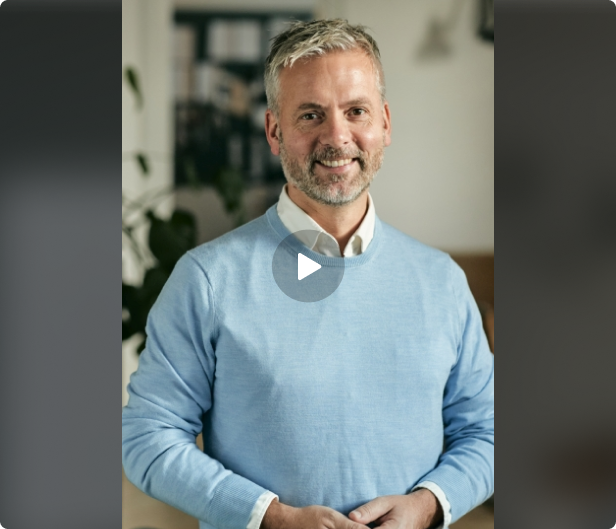
In this short video, I explain why the dread of the next attack often does more damage than the attack itself, and how we begin to take that dread apart by video.
You can also send me an email
Online panic attack therapy helps you when sudden surges of fear, with a racing heart, dizziness or a sense of dying, have started to dictate where you go and what you dare to do. We meet one to one, in English, by video from a place where you feel safe, in 1-hour sessions with 50 minutes of therapy at a time that suits your time zone.
I help you understand what the panic is reacting to, how the fear of fear keeps it going and what your body has been holding. This is a focused branch of online anxiety therapy, within my broader online psychotherapy.
From here you can request a free 30-minute call, book a first session, read my client policy or send me a message.
Online panic attack therapy is for English-speaking adults, anywhere in the world, whose lives have started to shrink around the fear of another attack. The first one may have come out of nowhere. You want to understand what happened and to trust your body again.
Panic can be part of several different difficulties, and some of them call for more specific help. If one of these lines is closer to your experience, the linked page fits better.
You can also send me an email
These reviews describe clients’ experiences of working with me. They come from my wider practice and do not all relate to online sessions. Each person’s experience is their own, and a review does not promise a particular outcome.
“Of all the people who find me online, the ones who come about panic are often the most practised at holding it together. Many of them had their first attack just after a long stretch of coping, a move abroad, a crisis survived. The body waited until it was safe enough to let go. Under the fear I hear ‘What if I fall apart and nobody is there?’ and, beside it, ‘I must manage this myself, so nobody sees.’ Some people say both in one breath: ‘Stay right here with me, only please do not look at me.’ I am convinced that fighting the panic is what keeps it strong. When you become curious about it, it slowly loses its power.”
Mark Colclough, MA, psychotherapist and EFT couples therapist
I am Mark Colclough, MA. I have practised since 2004 and offer online psychotherapy and couples therapy in English.
My training brings together your emotions, your thoughts and your relationships. My deep passion is the moment when what happens between you finally makes sense, to each of you and to each other. I have lived and worked in nine countries, so I know something of life across languages, cultures and borders.
Read about my background, or explore online psychotherapy and online couples therapy.

I meet regularly with experienced psychotherapists to reflect on my work, question my understanding and develop my skills. Supervision is part of the professional care I bring to individual and couples work, including online sessions.
My focus is thoughtful practice, integrity and responsibility.
You are welcome to ask about the kind of support you need.
Tell me where you are based and your time zone. We can then consider whether online sessions together are suitable.
Zara is 34, a British architect who has lived in Dubai for 5 years. Her first attack hit on a night flight back from London, an hour after take-off: pounding heart, numb hands, a certainty she was about to die. Cabin crew gave her oxygen. Since then she has missed her brother’s wedding, invented reasons not to fly to a conference and sits near the door in every restaurant. Her partner tries to help, which she finds both comforting and unbearable.
I would start by asking Zara what was happening in her life in the weeks before that flight, and what she has not allowed herself to feel since. In a first video session she would probably see that the panic came at the end of a long period of coping, and that her fear of the next attack is now doing most of the harm.
I have presented this clinical example as a compound of 22 years of clinical practice.
You have breathed, counted, avoided and pushed through, and the fear of the next attack still follows you everywhere.
You do not need to wait for the attacks to get worse, and you do not need a diagnosis before you come. If panic, or the fear of it, is changing where you go, how you travel or how you sleep, that is enough reason to seek help. In 22 years of practice I have seen how quietly a life can narrow around panic, and I recognise when it has become a pattern that needs professional attention.
If you have not yet had a doctor check your physical symptoms, please do that as well. Then I will help you see what sets the attacks off, what keeps them coming and what needs to change. These 6 questions may help you decide.
If you do, panic is already running more of your life than it should. You choose the aisle seat, avoid the motorway, skip the lift, leave the cinema early. Each choice seems small and sensible, but together they build a smaller and smaller world.
I would look at what you have stopped doing since the first attack, how fast the list has grown and whether it keeps spreading. That shows whether this is a frightening spell or a pattern that will tighten without help. If you see yourself here, book a session with me and we can start to widen your world again.
These pulls sit side by side because each meets a real need. One part of you misses travelling, wandering, saying yes without thinking twice. Another part has learned that staying close to safety keeps the terror away, and it will not give up its post easily.
I do not treat the careful part as weak or the brave part as right. I work with these as inner figures, each trying to look after you. I help you understand what the careful one fears and what the free one is longing for, so you can take steps that both can tolerate.
A skipped heartbeat, a warm face or a slight dizziness and your attention locks on. You check, measure, wait. The more closely you watch, the more you notice, and the noticing itself starts the rise. Being alone, or far from a hospital, makes the watching even sharper.
Your wish to feel safe in your own body is completely legitimate. What I help you change is the alarm that treats every sensation as a threat. We look at what the watching protects you from, often an older fear of being left alone with something too big, and you practise turning your attention outwards again.
This is common, and it can puzzle both of you. When the panic rises you want someone close, holding your hand, telling you it will pass. A minute later their concern feels like pressure and you want them out of the room. Afterwards you feel guilty for both.
I slow this sequence down with you, so we can find exactly when comfort turns into feeling trapped. There is usually a trigger, such as being watched while you lose control. I have real compassion for that swing, and I will also help you tell the people close to you what actually helps.
Many people never mention their panic. You excuse yourself, sit in a locked toilet until it passes, then return to the meeting as if nothing happened. You may even look calmer than everyone else. The cost is that you are entirely alone with it, every time.
My view is that this privacy protects something real, usually a fear of looking weak or being treated differently. I will not push you to tell everyone. I help you understand what the hiding guards, so you can let at least one person in and stop carrying all of it alone.
People often say they no longer recognise themselves. You were once the adventurous one, the one who moved country without a second thought. Now you check, plan and avoid. That change is painful, but it is not who you really are. It shows how hard you have been working to stay safe.
I help you look at which habits belong to the panic and which still belong to you, and what in your history made losing control feel so dangerous. I will challenge you when I see the fear deciding, but I will not hand you a new identity. The aim is to feel like yourself again.
If panic has been shaping your days, a free call lets you ask questions first, and booking a session lets you start this week.
You can also send me an email
Tell me briefly what kind of support you are looking for.
Include your country and time zone so we can discuss whether online work together is possible and find a suitable time.
You do not need to explain your whole story in your first message.
Your details are used to respond to your enquiry. Please leave detailed health information out of this form. Read the privacy policy for information about personal data, service providers and storage.
Understanding your panic matters, but the work also has to change where you go, how you travel and how you live in your body.
Working with me on panic will help you understand what your body is reacting to, recognise the cycle of fear, watching and avoiding that keeps it going, and make changes you can feel in daily life. Insight on its own will not get you back on a plane. You also need to practise, step by step.
Over 22 years of practice I have found that panic work moves when I play an active part. I will guide you, tell you what I see and challenge the safety habits that keep the fear alive. Each of the 6 questions that follow names one thing we will be working towards.
Related reading: Why am I calm all day and anxious at bedtime?, Why am I so anxious now that I’ve actually moved? and Why can’t I switch off from worrying about work?.
Panic often looks random, but it rarely is. I help you separate the attack from what lies under it: a long stretch of strain, an unspoken grief, anger you have kept down, or a fear of being alone with too much. Often the attacks began just after a period of holding everything together.
I give you my reading of what drives the panic, what needs attention first and which explanations are keeping you stuck, such as “My body is just faulty.” When you feel ready, book a session with me and we start to piece it together.
Even attacks that feel sudden usually have early signs: a tightness, a sense of unreality, shallow breath, a thought like “not here, not now”. Once you know your own first signals, you gain a window in which you can respond instead of fleeing.
I help you map that sequence and see what sets it off and what your usual reaction is meant to achieve. Knowing it is only the beginning. We practise a different response, in sessions and in daily life, until you can use it at the airport, in the supermarket queue or alone at night.
Riding it out does not mean pretending to be fine or forcing the feeling down. It means staying present enough to know that a wave of fear is passing through you, and that it will pass, even while it is intense.
I help you notice the surge earlier and understand what your nervous system is bracing against, often something your body remembers long before your mind does. We work with your breath, posture and attention. Practise daily between sessions, especially on calm days, so it is there when you need it.
It starts with knowing what actually helps you: someone quiet beside you, a bit of space, or simply not being rushed. Shame often makes people say nothing, or apologise so much that the real need gets lost.
I help you find short, honest words for what you need, for a partner, a colleague or a travel companion. I will challenge you when you stay silent out of pride, and when you expect others to handle the panic for you. We can rehearse the conversation together first.
Plans become your own again when you separate the fear of an attack from what you actually want. Panic quietly decides which jobs you apply for, where you live and whether you visit family. Each refusal feels safer, and each one makes the next harder.
I help you look at the choices the fear has been making and plan realistic steps back. I will challenge avoidance, but I will not push you faster than you can go, and the decisions are yours. If an urgent decision sits on top of the panic, acute online psychotherapy may suit you first.
The goal is not that you never feel a surge again. It is that a surge no longer decides your day. You may need to rebuild the trips, routines and freedoms the panic took, and learn to rest before your body forces you to.
We choose together which lost freedom to win back first. Your sensitivity and alertness are not the enemy. The aim is a life where they serve you, and where you trust your body enough to take it places again.
You can also send me an email
You do not need to explain your attacks perfectly or know what causes them. We begin with how panic is shaping your life now.
When you begin, I listen carefully, help you name what the panic has taken from you and set a clear direction from the first session. Many people meet me from home precisely because leaving the house is hard right now. That is a good place to start.
This is a focused form of online psychotherapy, structured individual work on your inner life and your relationships. If the panic mostly rises around your partner and the relationship is under strain, online couples therapy offers long-term relational development and healing. A therapy bundle gives real savings and the reassurance of an agreed plan when you know you need several sessions.
I ask when the attacks began, what happens in your body, what you now avoid and what you would most like to do again. We also look at what was going on in your life around the first attack. Whatever you leave out today can come later.
By the end I share my first understanding and propose a direction, and you decide whether it feels useful. If you would like to talk before booking, arrange a free 30-minute call.
Individual work is right when the panic lives mainly in you, in your body, your history and the way you have learned to hold things together. That is true of most panic, even when it affects your relationships. We can explore those relationships closely with nobody else on the call.
One to one, I offer direction, continuity and honest challenge from week to week. If panic is one of several things you want to look at, online psychotherapy describes my structured individual work as a whole.
Bring your partner in when the panic has reshaped the relationship as much as it has reshaped you. If your partner has become your full-time safety person, if arguments keep circling the restrictions panic has placed on you both, or if one of you pursues while the other retreats, the pattern lives between you.
In couples work I help both of you see that cycle, own your parts and find steadier ways of being together. Online couples therapy is long-term relational development and healing, not a quick fix for one argument.
It depends on how often the attacks come, how much they restrict you and how much continuity you need. When panic is strong, long gaps can let avoidance grow back quickly.
I usually suggest weekly sessions to begin with. I will tell you honestly if we are meeting too rarely, and when it is safe to meet less often. If you need several sessions close together, for example before a long flight, back-to-back online psychotherapy is designed for that.
A bundle makes sense when you know you will need several sessions and want to keep going through the uncomfortable middle part, when facing what you avoid is hardest. A planned course protects that continuity.
A bundle also lowers what each session costs. I am happy to tell you whether it fits your situation. Look at therapy discounts and bundles, or scroll on to the bundle cards.
The work has done its job when you can go where you want without planning an escape, when a surge passes without frightening you for days, and when you trust your body enough to carry on alone.
We review progress openly, and I do not keep people in therapy longer than they need. Sessions can thin out, pause or end once you feel steady. If a hard season brings the panic back one day, returning for a few sessions is not a sign of failure.

Not sure this is the right place to start? Here is how online panic attack therapy compares with the options closest to it.
| Option | Choose it when | Pace |
|---|---|---|
| Online panic attack therapy (this page) | Sudden surges of fear in your body, and the dread of the next one, are limiting your life. | Weekly 1-hour video sessions at first |
| Online anxiety therapy | Worry and tension are constant, rather than coming in sudden waves. | Weekly or fortnightly video sessions |
| Online social anxiety therapy | Your fear rises mostly when other people might be watching or judging. | Regular 1-hour video sessions |
| Acute online psychotherapy | Things have become overwhelming this week and you need help within days. | Video sessions close together at first |
Online panic attack therapy with me is individual psychotherapy by video, in English, for adults whose lives are being shaped by panic attacks and the fear of the next one. It helps you understand what your body is reacting to and break the cycle of fear, watching and avoidance.
I work with the whole person: your body, your feelings, your history and the strains that often come before the first attack. It is a branch of online anxiety therapy. I do not prescribe medication.
Come when panic, or the fear of it, is changing your choices: where you go, how you travel, whether you sleep, what you say yes to. One attack can be enough if the dread has stayed with you. Your own concern is reason enough.
I look at how long the attacks have been happening, how much they now restrict you and what was going on in your life when they began. If your world has been shrinking for months, it is time.
Often, yes. Therapy can reduce attacks a great deal and take away much of their power. I cannot promise you will never feel panic again, and I offer no quick fixes, but the fear of panic can change a lot.
In my clinical experience, people often improve most once they stop fighting the attacks and start getting curious about what the body is carrying. I would focus on that, and on gently reclaiming what you have given up.
Then we work with it together, calmly. It is often one of the most useful things that can happen, because we can see the rise in real time and you discover that you can get through it with someone steady on the other side of the screen.
I will not be alarmed, and I will help you slow down and stay present. You can pause, look away from the camera or step back from the screen at any moment.
Both are attempts to feel safe. Some people reach out urgently for someone to stay. Others shut the door and manage alone. Many do both within minutes. It is how your system learned to cope with fear, not a flaw in your character.
I help you see which way you move under pressure, what each move is trying to achieve and how it affects the people near you. Then we find steadier options, including how to ask for the kind of help you actually want.
We start with your most recent attack: where you were, what you felt, what you did and how long the fear stayed afterwards. Then we look at what has changed in your life since. Before we end, I give you my first understanding and a suggested way forward.
You do not need to prepare. If you are anxious about the session itself, that is fine, and we can start right there. Whenever you are ready, reserve the first session, or try a free 30-minute call to begin with.
Think in terms of a few months, meeting weekly to begin with. That is often enough to understand your panic and start reclaiming what you avoid. When panic is tied to long-held strain or older experiences, it usually takes longer.
Over 22 years of practice I have found that a clear first stretch, reviewed honestly, works far better than an open-ended arrangement. Each review ends with a joint decision: carry on, ease off or stop.
For many people, yes. Video lets you start from where you feel safe, without a journey that might itself set off an attack. As the work progresses, we can plan steps outside, and you can even join a session from a place you have been avoiding.
You need a private space, headphones, a stable connection and a laptop or tablet. Every time in the calendar is shown in your own time zone. If you are unsure, we can talk it over on a free call.
Panic work is booked like all my individual psychotherapy, as 1-hour online sessions with 50 minutes of therapy. The current fee, shown in US dollars, is on my prices page.
If you know you will need several sessions, a therapy bundle saves you 10 per cent and gives you a structured plan for the harder middle stretch. See therapy discounts and bundles for the sizes.
Pick a time for your first session in the calendar, or request a free 30-minute call if you would like to talk first. A few words about when your attacks began are enough.
If none of the times work, or the attacks are coming every day right now, write to me directly. I hold some room for acute cases, usually a time within days, and acute online psychotherapy describes that. Choose a time, and let us begin.
You can also send me an email
I want therapy to help you understand your experience and make choices you can use in everyday life. We pay attention to feelings, needs and the responses that happen before you have time to think.
Our online room should offer enough trust and honesty to explore what is difficult. I bring attention and professional judgement. You bring your experience, questions and the right to say when something does not fit.


Sign up for my occasional writing on feelings, relationships and life between cultures. No spam, and you can unsubscribe whenever you like.
I have designed this website to offer you a private, ad-free experience. Your personal data is never used, sold or shared with third parties. A few cookies are necessary for the site to work. If you say yes to helping me, I would also like to use one or two that show how the site is used, so I can improve its flow and content for you. It is completely pseudonymous, which means it does not identify you by name.
Please fill in your details and I’ll contact you soon. I use your details to reply to your enquiry, talk through practicalities and, if you wish, arrange an online session. Requesting a call also adds your email address to my mailing list. Please do not write sensitive information in the message field.
Clicking the button adds your email address to my mailing list. Please read the Privacy Policy for more information.
P.S. I’ll call you in a bit!