
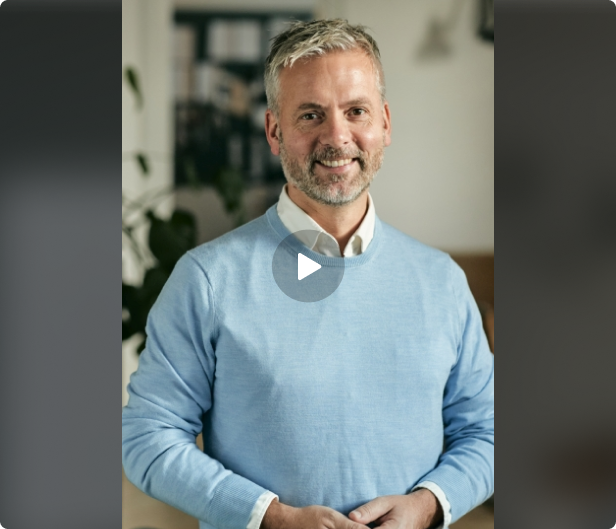
In this short video, I explain how I help couples whose brains run on different settings, and why we treat difference as information rather than as a fault.
You can also send me an email
Online neurodiverse couples therapy is for English-speaking couples, anywhere in the world, where at least one of you is autistic, has ADHD, is AuDHD or is wired in a similar way. We meet by video at an hour that suits your time zone and work on the misreadings, the overload and the quiet hurt that pile up when two minds process life differently.
Together we agree on ways of living side by side that respect the energy and limits of each of you. Online work has a real advantage here: you join from your own room, with your own light, sounds and comfort, and nobody has to travel when they are already worn out.
This is a main branch of online couples therapy. There are also pages for online ADHD couples therapy, online autism couples therapy, online AuDHD couples therapy and online neurodiverse couples therapy alone. You can ask for a free 30-minute call, book a session, read my client policy or write to me.
Online neurodiverse couples therapy is for English-speaking couples, wherever you live, who take part together and where at least one of you is autistic, has ADHD, is AuDHD or has a similar profile.
If one of these fits you better, the linked page is probably a closer match.
You can also send me an email
These reviews describe clients’ experiences of working with me. They come from my wider practice and do not all relate to online sessions. Each person’s experience is their own, and a review does not promise a particular outcome.
“With the neurodiverse couples I work with, what moves me most is how lonely two people who love each other can become. Under the arguments, one partner is often wondering ‘Do you even see me?’, while the other is asking ‘Why is the way I am never enough?’. Some people swing between ‘I need you close’ and ‘I cannot have you near me right now’ within the same hour. When those questions are finally heard, the relationship can start to fit both of you.”
Mark Colclough, MA, psychotherapist and EFT couples therapist
I am Mark Colclough, MA. I have practised since 2004 and offer online psychotherapy and couples therapy in English.
My training brings together your emotions, your thoughts and your relationships. My deep passion is the moment when what happens between you finally makes sense, to each of you and to each other. I have lived and worked in nine countries, so I know something of life across languages, cultures and borders.
Read about my background, or explore online psychotherapy and online couples therapy.

I meet regularly with experienced psychotherapists to reflect on my work, question my understanding and develop my skills. Supervision is part of the professional care I bring to individual and couples work, including online sessions.
My focus is thoughtful practice, integrity and responsibility.
You are welcome to ask about the kind of support you need.
Tell me where you are based and your time zone. We can then consider whether online sessions together are suitable.
Priya is autistic and works as a data analyst in Amsterdam. Her husband, Felix, has ADHD and works irregular hours in a hospital. Their evenings go wrong the same way. Felix comes home buzzing, full of stories and plans. Priya has spent the day in an open-plan office and needs silence. He feels pushed away. She feels flooded. Both go to bed exhausted and hurt.
In our online sessions, they see the pattern clearly for the first time. They agree on a quiet half-hour after Felix gets home, followed by a short, planned time to talk. Felix stops hearing the silence as rejection, and Priya finds she can actually listen once she has recovered.
I have presented this clinical example as a compound of 22 years of clinical practice.
The difference between your minds is rarely the problem. Not yet understanding it usually is.
In a neurodiverse relationship, one ordinary sentence can carry two completely different meanings. One of you hears a simple question. The other hears a complaint. Over the years those small misreadings stack up, until both of you feel invisible in your own home.
In online neurodiverse couples therapy we slow such moments right down and find out what each of you was really experiencing, so the next one does not have to go the same way.
Noise, shifting plans, a full inbox and one more conversation can drain a neurodivergent partner long before dinner. By the time you sit down together, there may be nothing left to give.
We map where the load builds up during the day and look for places to lighten it, so the evening is not the time when everything breaks.
One of you may say things very directly. The other may hint, or expect the meaning to be read from tone and timing. Each of you ends up feeling unheard, and each is sure they were clear.
We work out a way of talking that both of you can follow, without anyone having to guess.
When life feels uncertain, one partner may ask the same question again and again. The other can hear every repeat as an accusation, and pull away, which makes the need for an answer even stronger.
We look at what the reassurance is protecting and find steadier ways to give it, ones that do not cost the other partner everything.
When the input becomes too much, one of you may go silent, freeze or leave the room. To the other, that can feel like being abandoned in the middle of a sentence.
We learn what a shutdown actually is, how to spot it coming and how to come back together afterwards without blame.
Masking all day at work, or forever making allowances at home, can leave either of you drained and resentful. Often nobody has said out loud how much effort it takes.
We name that hidden work, so it can be seen and shared instead of quietly carried by one person.
After years of friction, some couples start to ask whether two such different minds can share a life at all.
We take that question seriously and look at it with everything you now understand about each other, so whatever you decide rests on clear ground.
Sound familiar? Request a call, book a session or simply send me a few lines by email.
You can also send me an email
Tell me briefly what kind of support you are looking for.
Include your country and time zone so we can discuss whether online work together is possible and find a suitable time.
You do not need to explain your whole story in your first message.
Your details are used to respond to your enquiry. Please leave detailed health information out of this form. Read the privacy policy for information about personal data, service providers and storage.
First we understand how each of you works. Then we make agreements that fit both.
We work on three things at once: the cycle that runs between you, the load each of you is carrying and practical agreements about talking, routines, rest and closeness.
Online neurodiverse couples therapy is not about turning one of you into the other. It is about building a shared life that has room for how both of you are made.
We take one typical clash and walk through it in slow motion: what each of you noticed, what you felt in your body, what you did next. Laid out like that, the loop becomes visible to both of you.
Once you can both see it, we can find the point where it is easiest to step out.
Yes. Each of you has early warning signs, such as speaking faster, going very quiet or needing to move. We learn to read them and agree on a simple signal for when one of you needs a pause.
Yes. We practise saying a need in one clear sentence and checking how it landed. That takes the mind-reading out of daily life, for both of you.
Yes. Good adjustments help both partners. If one of you is doing all the adapting, it will not last. We look for agreements where each of you gives a little and gains a lot.
Yes. Many couples carry years of moments that went badly long before anyone understood why. We revisit some of them with what you know now, so they can make sense, and so some of the old pain can finally settle.
For most couples it means fewer painful misunderstandings, less exhaustion at the end of the day and more ease in each other’s company.
It also means a shared language for the difficult moments, so you know what to do when they come.
You can also send me an email
You do not need labels to begin. What matters is that you are both willing to get curious about each other.
Early on I learn how each of you takes in information, what has been going wrong and what you hope will change. If another kind of help would fit you better, I will say so plainly, for example sessions on your own or online psychotherapy.
The first session lasts two hours by video, and pauses are allowed whenever you need them. Each of you describes the situations that hurt most. By the end we have a first sketch of the loop between you, and I tell you how I suggest we work with it.
Tell me what helps, and we will use it. That can mean turning your camera off for a few minutes, writing in the chat instead of talking, sitting in your own lighting, taking more breaks, or sending me a few notes before we meet. I can also send a short written summary afterwards.
Sometimes. A short individual session can help one of you say something that is hard to say with the other listening. If we do that, I explain beforehand how it works and what stays private.
Most couples meet every second or third week. That gives you time to try new agreements at home and come back with what you learned. If a steady rhythm will not work, back-to-back online neurodiverse couples therapy gathers the sessions into a block.
Neurodiverse couples usually need a series of sessions rather than one or two. A therapy bundle gives you a plan from the start and a lower price per session. The bundle cards further down show the options.
Arguments get shorter, you recover from them faster and home feels calmer for both of you. When that holds without me, we decide together whether to carry on, space the sessions out or stop.

Not sure which page fits? Here are the closest options.
| Option | Choose it when | Pace |
|---|---|---|
| Online neurodiverse couples therapy (this page) | A mix of profiles, or no clear label. | 2 hours, every second or third week |
| Online ADHD couples therapy | ADHD is the main theme. | 2-hour sessions |
| Online autism couples therapy | Autism is the main theme. | 2-hour sessions |
| Online neurodiverse couples therapy alone | Your partner will not take part. | 1-hour sessions on your own |
It is couples therapy by video, in English, for two people whose brains work differently, for example through autism, ADHD or AuDHD. It suits couples anywhere in the world, and the sessions are shaped around how each of you processes information.
Any couple where autism, ADHD or a similar profile shapes daily life, whether it applies to one of you or to both. Many couples I work with live abroad, which can add its own layer of strain.
No. Plenty of couples arrive with only a strong hunch, or with no label at all. We work with what you actually notice in everyday life.
Yes. We look at what happens in the minutes before a shutdown, what helps while it lasts and how the two of you can find each other again once it passes.
Yes. We explore what the need for reassurance is really about, and find ways to meet it that both of you can keep up over time.
Yes. If one profile sits at the centre of things, see online ADHD couples therapy, online autism couples therapy or online AuDHD couples therapy.
No. Assessment and medication belong with doctors and specialist services where you live. My work is the relationship between the two of you.
There is no fixed number. Most couples need a series of sessions, and we check regularly whether the work is still giving you what you came for.
Sessions are 2-hour online couples sessions. Current fees, in US dollars, are on my prices page, and a therapy bundle saves you 10 per cent.
Book a session in the calendar, which shows times in your own time zone, or ask for a free 30-minute call first. If you would rather write than talk, send me a message.
You can also send me an email
I want therapy to help you understand your experience and make choices you can use in everyday life. We pay attention to feelings, needs and the responses that happen before you have time to think.
Our online room should offer enough trust and honesty to explore what is difficult. I bring attention and professional judgement. You bring your experience, questions and the right to say when something does not fit.


Sign up for my occasional writing on feelings, relationships and life between cultures. No spam, and you can unsubscribe whenever you like.
I have designed this website to offer you a private, ad-free experience. Your personal data is never used, sold or shared with third parties. A few cookies are necessary for the site to work. If you say yes to helping me, I would also like to use one or two that show how the site is used, so I can improve its flow and content for you. It is completely pseudonymous, which means it does not identify you by name.
Please fill in your details and I’ll contact you soon. I use your details to reply to your enquiry, talk through practicalities and, if you wish, arrange an online session. Requesting a call also adds your email address to my mailing list. Please do not write sensitive information in the message field.
Clicking the button adds your email address to my mailing list. Please read the Privacy Policy for more information.
P.S. I’ll call you in a bit!